
FACT CHECKED
People living with diabetes face unique oral health challenges such as gum infections, slow wound healing, and higher chances of tooth decay which sometimes make tooth extraction the safest choice. High blood sugar can increase the risk of gum disease, dental infections and delayed healing which sometimes makes tooth extraction the safest choice.
At IVIA Dental, a trusted dental care center in Faridabad every treatment is planned with precision and patient safety in mind especially for individuals with medical conditions like diabetes.
This guide explains how diabetes and tooth extraction are managed at IVIA Dental, what to expect from the wisdom tooth removal in Faridabad and how to recover well.
Why is Tooth Extraction Essential in Diabetes?
Tooth extraction is a preventive and protective step for overall oral and systemic health. High blood sugar can make it difficult for the body to fight bacteria which increases the risk of gum infections and slow-healing wounds.
When an infected or decayed tooth is left untreated it can spread infection to nearby tissues or even enter the bloodstream, worsening diabetic control. In such cases, tooth extraction helps stop infection early, protects surrounding teeth and gums,and prevents more serious complications.
Additionally, removing problematic teeth such as impacted wisdom teeth can reduce recurring gum inflammation and pain helping diabetic patients maintain better oral hygiene and blood sugar stability.
In short, a well-planned extraction under professional supervision not only removes the source of infection but also supports faster healing, improved oral health, and better diabetes management.
At IVIA Dental we provide safe and painless wisdom tooth removal in Faridabad, planned carefully for oral infections and diabetes.
Tooth Extraction for Diabetic Patients – Pre-Procedure Preparation!
A careful pre-extraction assessment for diabetic patients keeps you safe and supports healing.
- Blood sugar control: Work with your physician to stabilise glucose and review HbA1c levels. Proper control enables clotting, tissue repair and infection resistance in diabetic patients.
- Medication review: Share your diabetic medication schedule. Your dentist may coordinate insulin management, medication timing or ask for medical clearance if you have complications such as diabetic neuropathy or heart/kidney disease.
- Antibiotic plan: Antibiotic prophylaxis is considered case-by-case (active infection, extensive surgery or risk factors).
- Anaesthesia safety: The planning of anaesthesia and blood sugar is done together. Local anaesthesia is common, sedation options are selected carefully.
- Appointment timing: Morning visits often help reduce hypoglycaemia risk. Bring your meter for glucose monitoring and a quick snack unless fasting is advised.
Tooth Extraction Process at IVIA Dental
Our goal is a painless tooth extraction with minimal pain and fast recovery.
- Simple extraction: For single-rooted teeth above the gumline, our dentist loosens the tooth from the periodontal ligament and removes it gently.
- Surgical extraction: For impacted, broken or multi-rooted teeth, the surgeon may elevate soft tissue, contour a small amount of alveolar bone, section the tooth and place gum stitches to support socket healing.
- Atraumatic extraction: We use techniques and instruments that protect bone and soft tissues, reducing swelling and aiding collagen formation and cellular regeneration.
- Socket preservation (when needed): If you plan an implant later, socket preservation with a small bone graft can help maintain the ridge.
This careful approach limits bleeding, protects the clot and supports microvascular health, blood circulation and inflammation control for people with diabetes.
What to Expect Right After The Tooth Removal Procedure?
- Clot protection: Your dentist will place a small piece of clean gauze on the area where the tooth was removed. Keep it gently pressed between your teeth by closing your mouth lightly for about 30-45 minutes. This helps stop the bleeding and allows a clot to form.
- Pain control: Use only advised painkillers for diabetics. Avoid mixing medicines or taking new ones without asking your doctor.
- Infection prevention: Take any prescribed safe antibiotics exactly as directed and complete the antibiotic course. This helps your mouth heal faster and keeps infections away.
Post-Extraction Care for Diabetic Patients
Follow these steps to promote gum healing and avoid diabetic wound infection:
- Mouth care: From day two, rinse gently with a saline mouthwash or oral antiseptic rinse if advised. Brush the other teeth normally, use gentle brushing around the site.
- Food & fluids: Choose a post-extraction diet with soft, cool foods. A soft food diet for diabetics can include yoghurt, dal, khichdi, soups and mashed vegetables. Maintain hydration and healing with water.
- Lifestyle: Avoid smoking and alcohol during healing as both increase infection risk and delay repair.
- Glucose checks: Continue glucose monitoring and follow your physician’s plan for insulin adjustment and hypoglycemia prevention.
- Follow-up appointment: Never skip a review appointment so we can confirm socket healing and remove gum stitches if placed. Your dentist may perform gentle dental curettage if cleaning the socket is required.
Final Words
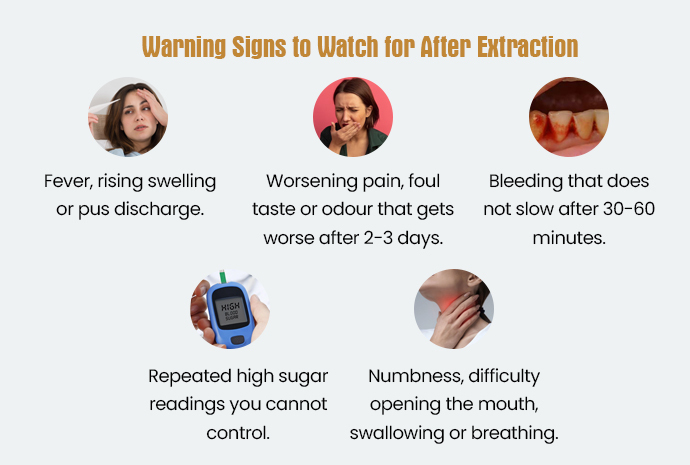
If you notice swelling, severe pain, infection or continuous bleeding after a tooth extraction with diabetes, contact your dentist or primary care doctor immediately. These symptoms may signal infection or delayed healing, which need prompt care.
We understand the special care that diabetic patients need during and after tooth extraction. We focus on infection prevention, gentle techniques and safe pain management to support fast and comfortable healing.
If you are looking for a trusted dental clinic near me in Faridabad for tooth extraction with diabetes, IVIA Dental is here for you. Our experienced dentists provide painless dental treatment for tooth extraction, expert guidance and complete post-extraction care to help you maintain good oral and overall health.
FAQs
Q1. Is extraction safe for people with diabetes?
Ans. Yes, it is safe if done with proper planning. We work with your doctor, stabilize the sugars, customize the anaesthesia and take infection prevention measures for a safe dental surgery experience.
Q2. What is the difference between simple and surgical extraction?
Ans. Simple extraction is a removal of a tooth that is visible with minimal intervention. A surgical extraction is the removal of an impacted, broken or complex root and thus may involve the small bone reshaping and stitches.
Q3. How can I reduce the chance of a dry socket?
Ans. Help the clot to form, do not smoke and do not vigorously rinse, follow the rinse plan and go to the review appointments. These steps help tissue regeneration and inflammation control.
Q4. Which pain medicines are safe for diabetics?
Ans. Use only prescribed or approved ones. We consider your medical history, other drugs and blood sugar when recommending painkillers for diabetics.
Q5. Can I get same-day tooth removal?
Ans. Same-day tooth removal may be possible if the infection and glucose are under control. Your dentist will confirm after the examination.