
FACT CHECKED
Mornings with kids can feel like a race. School bags, tiffin, last-minute socks, and then the daily negotiation to brush without a battle. Add sweets, snacking, and busy weekdays, and oral hygiene for kids can slip even when you are trying your best. Most parents are not looking for perfect routines. You want fewer cavities, fewer emergency toothaches, and a child who is not scared of the dentist.
This guide is a practical, dentist-approved plan to keep your child’s smile healthy. It covers what to do daily, brushing by age, how much fluoride is safe, when to start flossing, food habits that quietly cause cavities, and when a checkup should happen. If you are searching kids dental care near me, you will also learn what to look for in the right clinic before you book.
At IVIA Dental Clinic, we help parents build simple, prevention-first habits that kids can actually stick to, without overwhelm.
Read the blog below for an age-by-age routine, quick checklists, and clear next steps you can start today.
Why Do Baby Teeth Matter If They Will Fall Out Anyway?
Baby teeth matter because they support chewing, speech development, and proper spacing for permanent teeth, which reduces avoidable alignment and bite issues later.
Even though baby teeth fall out, early tooth decay and early tooth loss can affect eating, sleep, confidence, and the way adult teeth erupt.
Healthy baby teeth help children:
- Chew food comfortably and properly.
- Develop clearer speech.
- Hold space so permanent teeth come in correctly.
A Parent-Led Routine That Grows With Your Child
- Do it for them when they are young.
- Do it with them as they learn.
- Check and correct once they brush independently.
This approach is simple, realistic, and usually leads to better consistency than relying on reminders alone.
What Is The Best Daily Oral Hygiene For Kids Routine?
The best daily routine is one that happens consistently, uses the right amount of toothpaste, and includes adult supervision until brushing skills are reliable.
When parents keep the routine predictable, children fight it less and cavities reduce over time.
The 2-2-2 Rule Parents Can Remember
- Brush twice a day, morning and night.
- Brush for two minutes, including back teeth.
- See a dentist twice a year for prevention-focused checkups.
Brushing By Age: What Parents Should Do At Each Stage
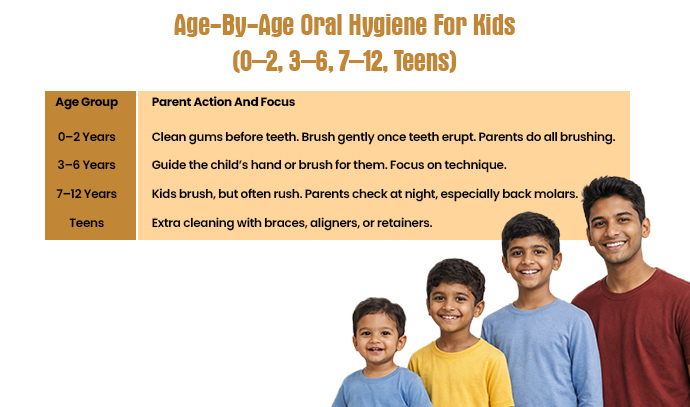
- 0–2 Years – Clean gums even before teeth appear. Once teeth erupt, parents should brush gently with a soft toothbrush.
- 3–6 Years – Parents should guide the child’s hand or brush for them. Focus on correct technique, not speed.
- 7–12 Years – Kids often rush and miss back molars. They can brush independently, but parents should check at night.
- Teens – Extra cleaning is needed with braces, aligners, or retainers because food traps increase.
- Experience-based insight: Most cavities in school-age kids start in back molars because they are harder to reach and often brushed quickly, especially at night.
How Much Fluoride Toothpaste Is Safe And Effective For Kids?
Fluoride toothpaste is safe and effective when the amount is age-appropriate and an adult supervises brushing.
The goal is protection against cavities without swallowing excess toothpaste.
Use these amounts:
- Smear or rice-sized amount for babies and toddlers.
- Pea-sized amount once your child can spit reliably.
Parent tip that improves safety: Put toothpaste on the brush yourself until your child reliably uses the right amount. This reduces accidental overuse and keeps brushing consistent.
When Should Kids Start Flossing And How Can Parents Make It Easier?
Kids should start flossing when two teeth touch because a toothbrush cannot clean the tight contact area well enough on its own.
Starting early prevents plaque buildup between teeth, which is a common cavity spot as spacing closes.
How to make flossing easier:
- Start with 2–3 tooth contacts first, then expand gradually.
- Use child-friendly flossers if standard floss is tricky.
- Make it part of bedtime routine, not a rushed morning step.
Which Foods And Drinks Cause Cavities In Kids And Why Does Frequency Matter?
Cavities are often driven by frequent sugar exposure, not just “how much sugar” a child eats in one sitting.
Every sugary snack or sip creates an acid attack on enamel, and repeated exposure gives teeth less time to recover.
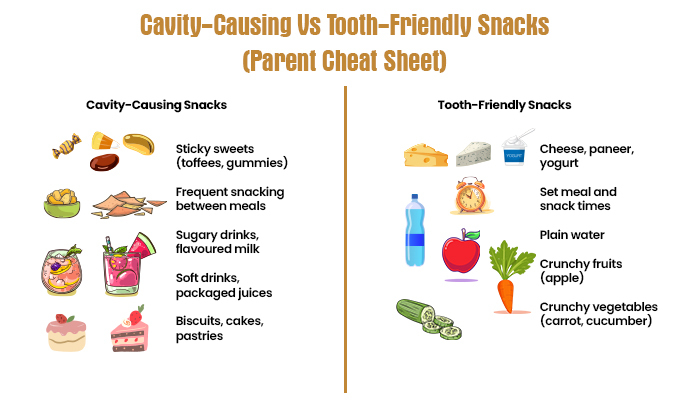
Biggest Offenders
- Sticky sweets like toffees and gummies.
- Sugary drinks, flavoured milk, packaged juices, soft drinks.
- Frequent snacking between meals, even on “healthy” snacks.
Teeth-Friendly Swaps Parents Can Use Today
- Cheese, paneer, yogurt can help neutralise acids.
- Crunchy fruits and vegetables like apple, carrot, cucumber.
- Age-appropriate nuts if safe for your child.
Smart Rules That Prevent Daily Battles
- Keep dessert with meals, not between meals.
- Water after every snack.
- Fixed treat time instead of frequent grazing.
Unique, practical insight: If treats happen, pairing them with a meal is usually easier on teeth than “small sugary bites” throughout the day.
When Should A Child Visit A Pediatric Dentist For The First Time?
The first dental visit should happen by the first birthday or when the first tooth appears, because early visits focus on prevention and guidance.
This helps parents learn what is normal, what to watch for, and how to reduce cavity risk before problems begin.
What Happens At A Kids’ Dental Checkup?
A typical kids checkup includes:
- Examining teeth, gums, and overall oral development.
- Gentle cleaning if plaque buildup is present.
- Cavity risk check and early warning signs.
- Home-care coaching for brushing, toothpaste amount, and diet.
Fluoride Treatments And Sealants: Who Needs Them?
Fluoride treatments strengthen enamel and reduce cavity risk. Sealants protect molar chewing surfaces where cavities commonly start. A dentist recommends these based on your child’s age, cavity risk, and molar anatomy.
What Dental Problems Are Common In Kids And Which Need A Dentist?
Many minor issues can be managed with calm first steps, but swelling, fever, severe pain, or sleep disruption needs same-day dental guidance.
Parents do best when they follow a simple triage plan and avoid guessing.
Toothache, Sensitivity, Or Bleeding Gums: Quick Parent Action Plan
| What You Can Do Today | Call The Dentist Same Day If |
| Brush gently with a soft toothbrush | Swelling in gums, face, or jaw |
| Rinse with plain water | Fever with tooth pain |
| Avoid very hot, cold, sugary foods | Severe or worsening pain |
| Provide comfort and observe | Pus or bad taste |
| Monitor eating and sleep | Trouble eating or sleeping |
Dental Injuries in Kids From Falls Or Sports: A Simple Action Plan
| Do This Immediately | Get Urgent Dental Care If |
| Stay calm and check the mouth | A tooth is knocked out |
| Rinse gently with water | Tooth is broken and bleeding |
| Apply light pressure if bleeding | Tooth feels loose after injury |
| Avoid chewing on injured side | Ongoing pain or bleeding |
How Do You Choose The Right Kids Dental Care Near Me?
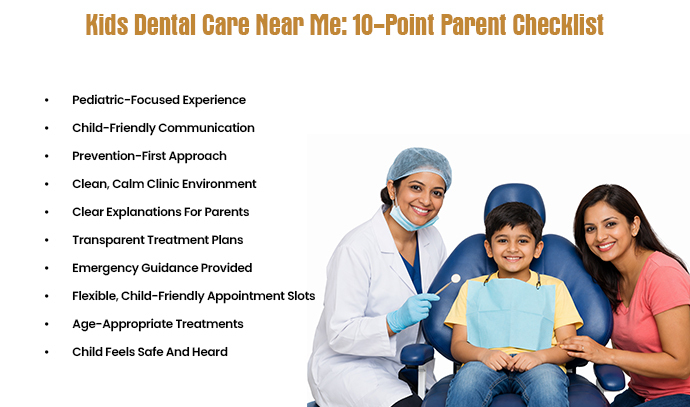
The right clinic is one that regularly treats children, explains care clearly, and makes visits feel safe, not scary. If you are searching for kids dental care near me, use this checklist to choose based on quality and fit, not just distance.
What To Look For?
- Child-friendly communication.
- Regular experience treating kids.
- Clean, calm clinic environment.
- Transparent treatment plans.
- Appointment slots that fit school schedules.
Questions To Ask Before You Book!
- How do you handle anxious kids?
- Do you offer sealants or fluoride?
- Do you have child-friendly appointment slots?
- What should I do if my child has a dental emergency?
Signs You Have Found The Right Dentist For Your Child
- Your child feels heard and safe.
- You receive clear home-care instructions you can follow.
- There is a simple follow-up plan, so you know what happens next.
Book Your Child’s Dental Visit At IVIA Dental Clinic
A prevention-first dental visit helps parents catch small problems early and gives kids a calmer, more confident experience. At IVIA Dental Clinic, we focus on child-friendly communication, practical parent guidance, and gentle care that supports long-term habits.
A Simple 3-Part Action Plan
- Today: Fix brushing routine and reduce snack frequency.
- This week: Add flossing support and switch to tooth-friendly snacks.
- This month: Book a kids’ dental checkup if it is overdue or if you notice red flags.
Small, consistent steps now can make a lifelong difference in your child’s smile.
Searching for kids dental care near me in Faridabad? Book your child’s visit with IVIA Dental Clinic.
- Call or WhatsApp: +91 93501 30755
- Hours: 9 AM to 8 PM, Monday to Saturday
Frequently Asked Questions
How Many Times A Day Should My Child Brush?
Brush twice a day, morning and night, and supervise until technique is reliable.
When Should Kids Start Flossing?
Start flossing once two teeth touch, especially for back teeth where cavities commonly begin.
Is Fluoride Toothpaste Safe For Kids?
Yes, when used in the correct amount for age and supervised by a parent.
How Often Should Kids See A Dentist?
Twice a year for preventive checkups, or more often if your dentist advises due to cavity risk.
What Are Dental Sealants And Does My Child Need Them?
Sealants are protective coatings for molars that reduce cavity risk. A dentist decides based on your child’s teeth and risk level.
My Child Is Scared. How Do I Prepare Them For A Dental Visit?
Keep it positive and simple, avoid scary words, and choose a clinic that is used to working with children.
What Should I Do If My Child Has A Toothache At Night?
Rinse with plain water, avoid hot, cold, or sugary foods, and check for swelling or fever. If pain is strong or persistent, contact a dentist.